
Spanaway Traffic Ticket Records Guide
Spanaway Traffic Ticket Records are processed through Pierce County District Court because Spanaway is an unincorporated Pierce County community without its own municipal court. If a citation was issued in Spanaway by the Pierce County Sheriff's Office or Washington State Patrol, the county court is the place that holds the case, receives the response, and manages the hearing path. That means the first step is not looking for a local city courtroom. It is identifying the district court file, using the county's case tools, and following the official Pierce County process from the ticket to the record.
Spanaway Traffic Ticket Records Search
The most useful place to start with Spanaway Traffic Ticket Records is the official Pierce County case search. The county's LINX portal is the public online case information system for Pierce County District Court and Pierce County Superior Court. Users can search by name, case number, or citation number, which is helpful when a Spanaway ticket was issued on paper and the notice is no longer in front of you. The portal can confirm that the case exists and show the basic public information tied to it before you move to the next step.
Spanaway is unincorporated, so the record path is simpler than it first looks. There is no Spanaway municipal court to divide the citation from the record. If the ticket belongs to Pierce County District Court, the county court is also the court that answers the response questions, tracks the hearing request, and keeps the file. That is why a search in LINX is so important. It tells you whether the citation is already visible in the county system and gives you the starting point for any later record request.
For many Spanaway users, the search is only the beginning. Once the case is located, the next question is whether the notice should be paid, challenged, or documented for later use. The county's court pages are designed for that transition. They connect the record search to the response deadline, the hearing request, and the copy request, so the ticket does not sit in isolation. That is especially useful in Spanaway because one citation may be the only record a person has when the stop happened on a busy county road and the paper copy is already misplaced.
Spanaway Traffic Ticket Records Response Path
When a Spanaway citation reaches Pierce County District Court, the county gives you the same basic choices it gives other unincorporated Pierce County communities: pay the ticket, request a mitigation hearing, or contest the ticket. The court says the response window is 30 days. That deadline controls the case file, because an unanswered ticket can pick up a late penalty and move toward collections or other enforcement steps. The county also says payment plans may be available, which matters when the fine is due but not easy to pay all at once.
A mitigation hearing is the choice when you want to explain circumstances without denying that the ticket happened. A contested hearing is the choice when you believe the violation should not stand. Pierce County also allows hearing requests online or by mailing the ticket back to the court, and the hearing itself may be in person or by mail. For Spanaway Traffic Ticket Records, that flexibility is important because it keeps the case in the county system without requiring a trip to a separate city office that does not exist.
The county's hearing guidance also notes that a committed finding can lead to a report to the Department of Licensing, which means the infraction can appear on the driving record. If a driver cannot afford to pay the amount in full, the court says a payment plan can be requested. That means the Spanaway ticket is not just a one-time citation. It becomes a record that can affect the state driving file, the amount owed, and the way the case closes out. The response path you choose shapes all of those outcomes.
Spanaway users also benefit from the county's communication tools. Pierce County District Court offers Live Chat, email help, and the ability to request interpreter services. Continuances can be requested in writing or in person with case-specific information. Those options matter when a hearing date conflicts with work, transportation, or language access. The important part is to use the county tool that fits the problem instead of letting the deadline expire while trying to sort out the next step.
Spanaway Traffic Ticket Records And Court Files
If you need the actual file behind a Spanaway citation, Pierce County's district court records request page is the right path. District Court case records are records that relate to in-court proceedings, including case files, dockets, calendars, and orders. The county says those records can be requested by mail, email, or online, and the request should include the person's name, date of birth, case number if known, date of incident if relevant, the specific documents requested, the urgency of the request, and whether the record should be sent by email. The mailing address listed by the county is Pierce County District Court, Attn: Public Records Officer, 930 Tacoma Ave S, Rm 239, Tacoma, WA 98402, and the records phone number is 253-798-7487. That information lets the court match the request to the correct Spanaway case rather than the wrong ticket.
The county also makes a clear distinction between district court records and other records. District Court cannot provide Superior Court or Juvenile Court case information through the same request process, and administrative records require a separate form. That matters if a Spanaway search starts with a traffic infraction but later turns into a broader court-record question. The search portal can tell you the case is there. The records request tells you how to get a copy of the actual file.
For Spanaway Traffic Ticket Records, that difference between case lookup and copy request is the practical part of the workflow. A lookup confirms the citation and shows public status information. A records request asks for the documents themselves. Many people need both at different points, but they are not the same task. Keeping them separate makes it easier to get the right document from Pierce County District Court without waiting on the wrong office.
| Court | Pierce County District Court |
|---|---|
| Address | 930 Tacoma Ave S, 2nd Floor Tacoma, WA 98402 |
| Phone | 253-798-7487 |
| Records Request | Pierce County case information and records request page |
Spanaway Traffic Ticket Records Images
A screenshot from the official Pierce County Court Records page shows the county's own guide for finding court files and understanding which office keeps the record.
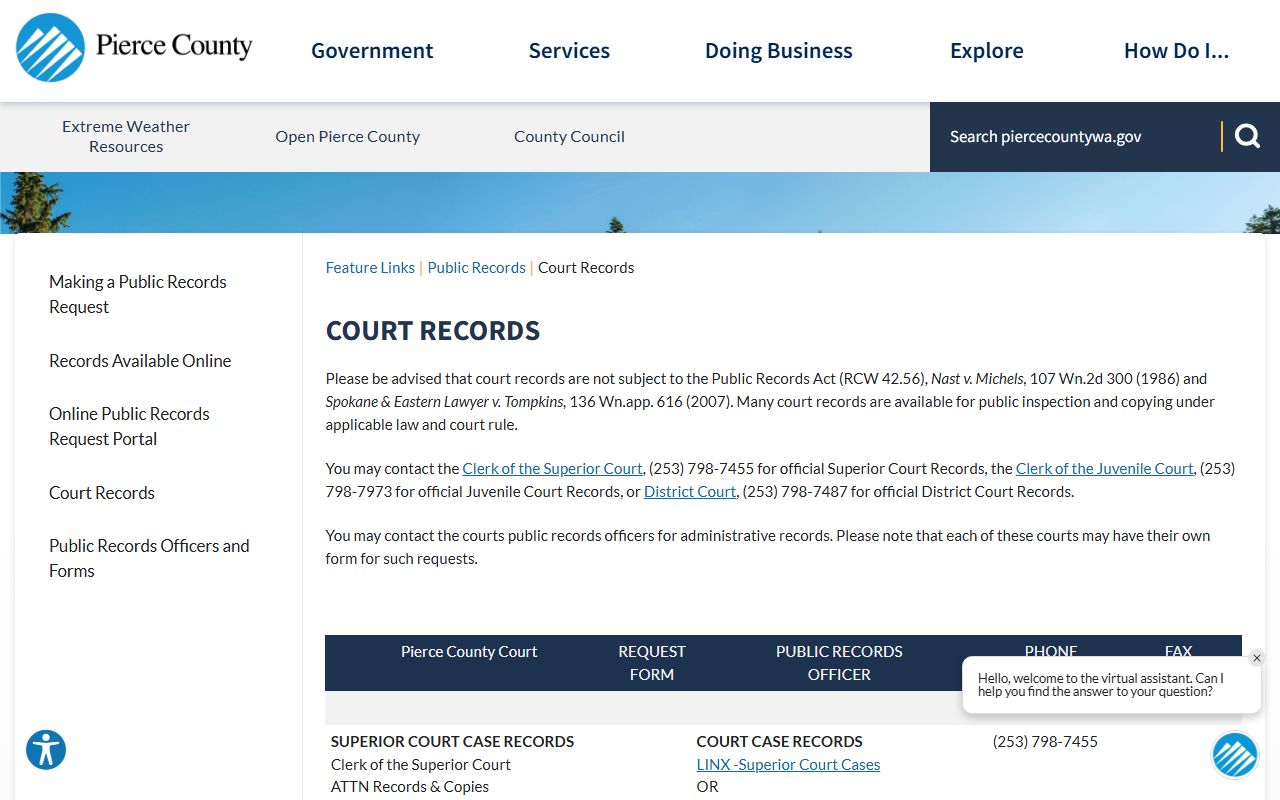
That image helps anchor Spanaway searches in the official district court record system rather than a third-party site.
A screenshot from the official Pierce County Clerk of the Superior Court page shows the office that keeps superior court records and separates them from district court traffic files.
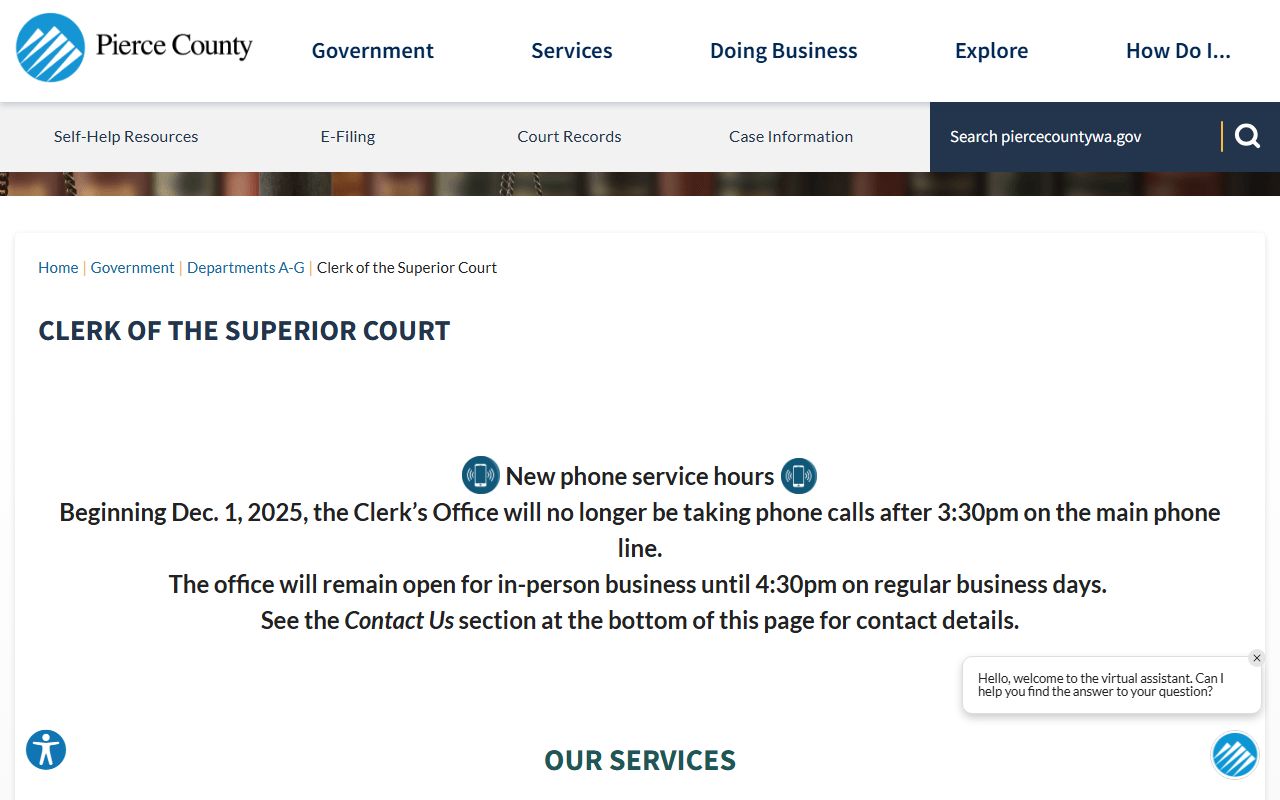
That clerk page is useful when a Spanaway citation search expands into a broader Pierce County court-record question.
A screenshot from the official Pierce County Records Available Online page shows the county's list of record sources for court matters, accident reports, and other public records.
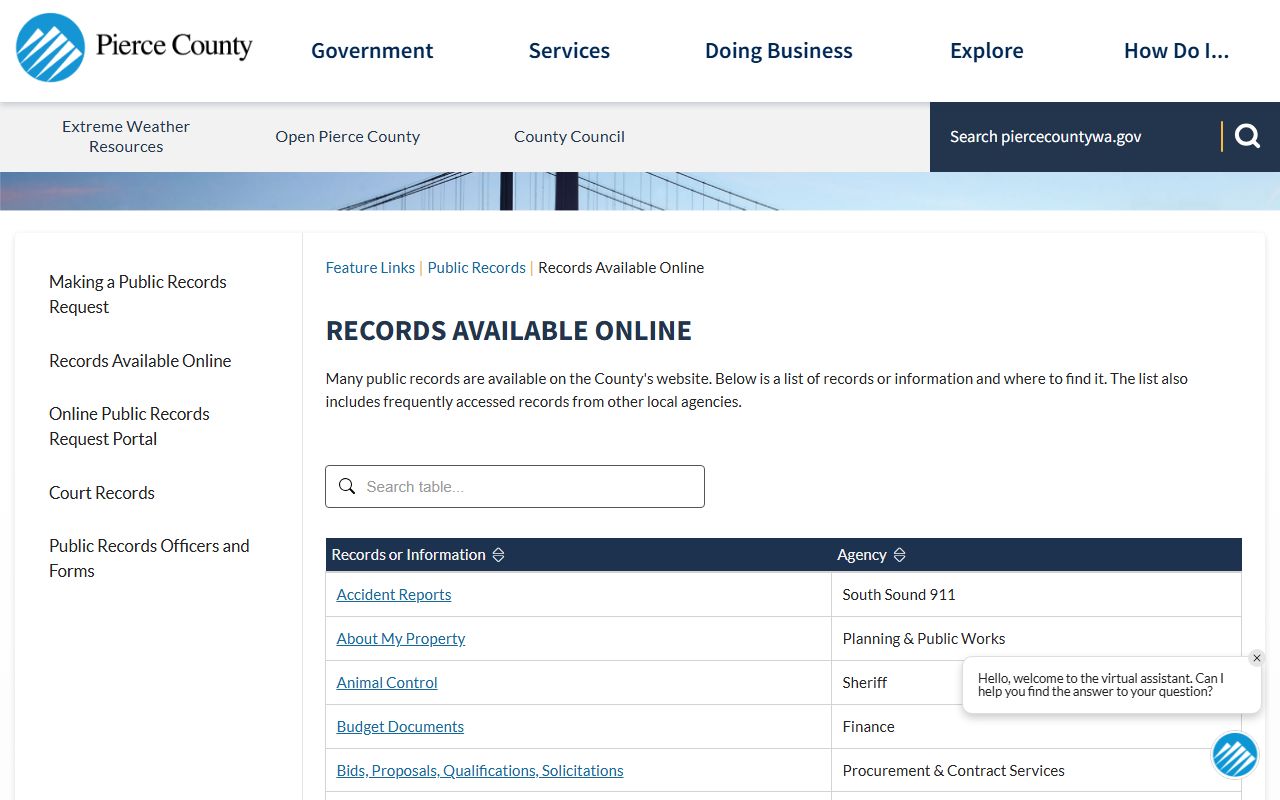
That page is the best reminder that a ticket, a report, and a court file may each live in a different county record source.
Spanaway Traffic Ticket Records Next Steps
The safest next step for Spanaway Traffic Ticket Records is to match the citation to the county tool that actually controls it. Use LINX if you need to confirm the case exists or see its public status. Use the district court response process if you need to pay, ask for mitigation, or contest the ticket. Use the district court records request page if you need copies of the file or docket materials. Those tools work together, but each one solves a different problem.
Because Spanaway does not have a municipal court, the county court is the only place that can finish the traffic-record workflow. That simplifies the search once you know the ticket belongs to Pierce County District Court. The result is a single official path for the record, the hearing, the payment, and the copy request, all tied back to the same court file.