
Search Washington Traffic Ticket Records
Washington Traffic Ticket Records are spread across district courts, municipal courts, superior court clerks, statewide case-search tools, and driving-record systems. A ticket from Seattle follows a different local court path than a ticket from Yakima, Port Townsend, or Long Beach, but the search process is still manageable when you start with the right court of record. This site is built to help people search Washington Traffic Ticket Records by county, city, hearing path, and record source, whether the goal is to confirm a citation, request copies, check a court date, locate a collision report, or understand what reached the Washington driving record.
Washington Traffic Ticket Records Overview
Where Washington Traffic Ticket Records Usually Start
Most Washington Traffic Ticket Records start in a court of limited jurisdiction. That usually means a county district court or a city municipal court. The court listed on the notice is the first detail to trust. If the ticket came from a county deputy, Washington State Patrol, or a city police officer, the record often lands in the court that serves that location. The fastest way to avoid confusion is to match the citation to the court named on the ticket and then use the official court page for payment, mitigation, contesting, or copy requests.
Washington also uses statewide tools that help narrow the search. The official Washington Courts site links to public case search tools and court directories. The public-facing case search at dw.courts.wa.gov can help confirm whether a case appears in the Washington system and point users toward the court of record. That is useful when the notice is missing, the number is hard to read, or the ticket may already have moved into the court calendar.
Some Washington Traffic Ticket Records stay local from start to finish. Others branch into a second record path after the court action is done. A committed infraction can later appear in the Washington driving record maintained by the Department of Licensing. A crash-related ticket may also connect to a separate Washington State Patrol collision report. That is why a clean search usually starts with the court file, then expands only if the question is really about the driving record or the collision report.
How To Search Washington Traffic Ticket Records
The practical search order for Washington Traffic Ticket Records is simple. Start with the court that issued or received the citation. Use the statewide court search only as a locator. Then decide whether you need the live citation workflow, a court copy, a driving record, or a collision report. Those are related records, but they are not interchangeable. Court records show what happened in the case. Driving records show what the state received from the case. Collision reports describe the investigated crash event.
County and city pages across Washington often separate response options into the same broad choices: pay the infraction, ask for a mitigation hearing, request a contested hearing, or apply for a payment arrangement when the court allows it. The details vary by court, which is why this site breaks Washington Traffic Ticket Records into county and city pages instead of treating the whole state as one uniform system. King County, for example, uses different court paths than Lewis County, and Clallam County splits traffic work between east and west district court branches.
If the question is about the state record rather than the local court file, the official Department of Licensing driving record page is the better next step. Washington calls that record an abstract driving record. It can show violations, convictions, collisions, and suspensions that have already been reported to the state. That record is not a substitute for the court file, but it is often the only way to check the longer-term state effect of a Washington ticket.
Washington Traffic Ticket Records By Record Type
Washington Traffic Ticket Records usually fall into three public-record buckets. The first is the court case itself. That record sits with the district court, municipal court, or superior court clerk that owns the file. The second is the driving record, which sits with DOL. The third is the collision report when the stop or citation came out of a crash investigated by troopers. The Washington State Patrol collision records page is the official source for that report.
This distinction matters because people often ask one office for the wrong document. A court cannot replace a Washington State Patrol collision report. The patrol cannot replace a district court docket. DOL cannot provide the full court file behind a citation. Washington Traffic Ticket Records become much easier to manage when the document request matches the office that actually keeps the record. That is the main organizing idea behind the county and city guides on this site.
Washington law also shapes access boundaries. The official RCW site is useful when a record question turns into a legal one, especially for traffic infraction procedure, court access, and driving-record consequences. Most users do not need to begin with statutes, but the code helps explain why some records are open, why others are restricted, and why courts separate case files from judicial administrative records.
Note: A Washington ticket, a Washington driving record, and a Washington collision report may all describe the same event, but they are kept by different agencies and should be searched separately.
County And City Pages For Washington Traffic Ticket Records
Washington Traffic Ticket Records are local enough that the county or city often changes the right answer. A Seattle traffic file may point to Seattle Municipal Court. A Spanaway traffic file points into Pierce County District Court. A Cle Elum matter can route through Upper Kittitas County District Court. A South Pacific ticket can belong in Long Beach even though the county clerk for superior court records sits in South Bend. That is why local court structure matters more than the city name alone.
The county guides on this site focus on county-wide court structure, superior court clerk access, district court paths, and statewide support links. The city guides focus on where a specific city or unincorporated place actually sends its ticket records. Some city pages are truly municipal. Some are county-centered because the community does not run its own municipal court. That difference is a real part of Washington Traffic Ticket Records, not just a writing choice.
The county list below covers all 39 Washington counties. The city list highlights the cities and census-designated places from the build target set. Together they provide the local court names, addresses, hearing paths, and records-request guidance that a statewide search page cannot capture on its own.
State Tools That Support Washington Traffic Ticket Records
The main statewide support tools are all official. Use Washington Courts and Washington Courts case search to confirm case location and court information. Use DOL driving records when the question is about the Washington record attached to the driver. Use WSP collision records when the ticket is tied to a crash handled by troopers. Use MRSC guidance when you need a plain-language public-records overview for traffic, vehicle, and accident records in Washington.
Those state resources are most useful when local page details run out. They do not replace the county or city court page, but they help cross-check a Washington search and explain what kind of record exists. They also help when a person only remembers part of the event, like the location, the agency, or the year, but not the exact ticket number. In that situation, the state tools narrow the search while the local court still controls the actual file.
Washington Traffic Ticket Records are therefore best understood as layered records. The court owns the active file. DOL owns the driving abstract. WSP owns the trooper-investigated collision report. The county and city guides on this site are meant to connect those layers without forcing users through low-quality directories or generic search results.
That layered approach also helps when a Washington search starts after the deadline has already passed. A person may need to find out whether the ticket was committed, whether a hearing was set, whether the balance moved into a payment plan or collections path, and whether the result reached the Washington driving record. No single office answers all of that. The court page answers the live case question. DOL answers the state-record question. WSP answers the collision question. Keeping those roles separate is the best way to search Washington Traffic Ticket Records without wasting time.
Washington Traffic Ticket Records Images
A screenshot from the official Washington Courts site shows the statewide court system entry point used to move from a place name or case number into the correct local court.
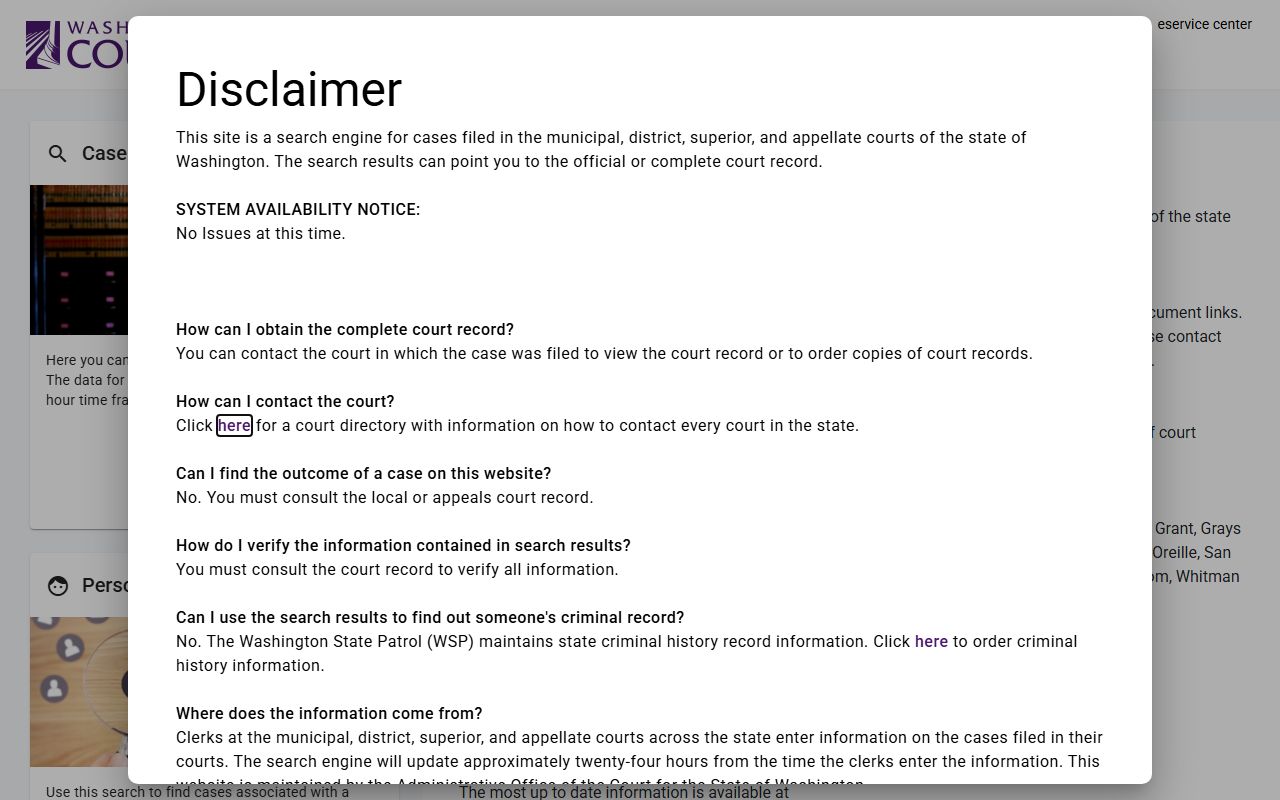
That image belongs on the home page because the statewide case search is the most common starting tool when a person does not yet know which Washington court owns the file.
A screenshot from the official Department of Licensing driving records page shows the state-level record path for checking how a traffic case reached the Washington driving abstract.
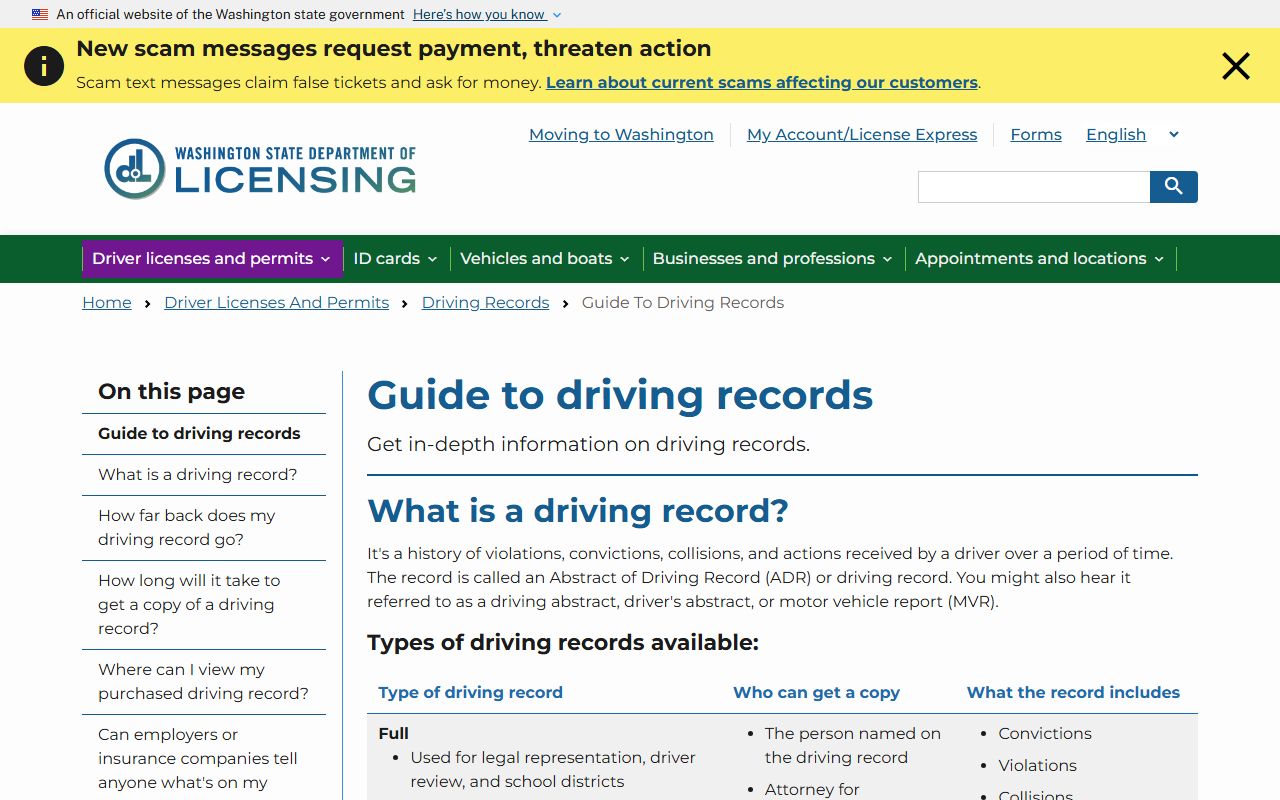
That image fits here because many Washington Traffic Ticket Records searches do not stop at the court file and need a second step into the state driving record.
A screenshot from the official Washington State Patrol collision records page shows the statewide source for crash reports when a ticket came out of a trooper-investigated collision.
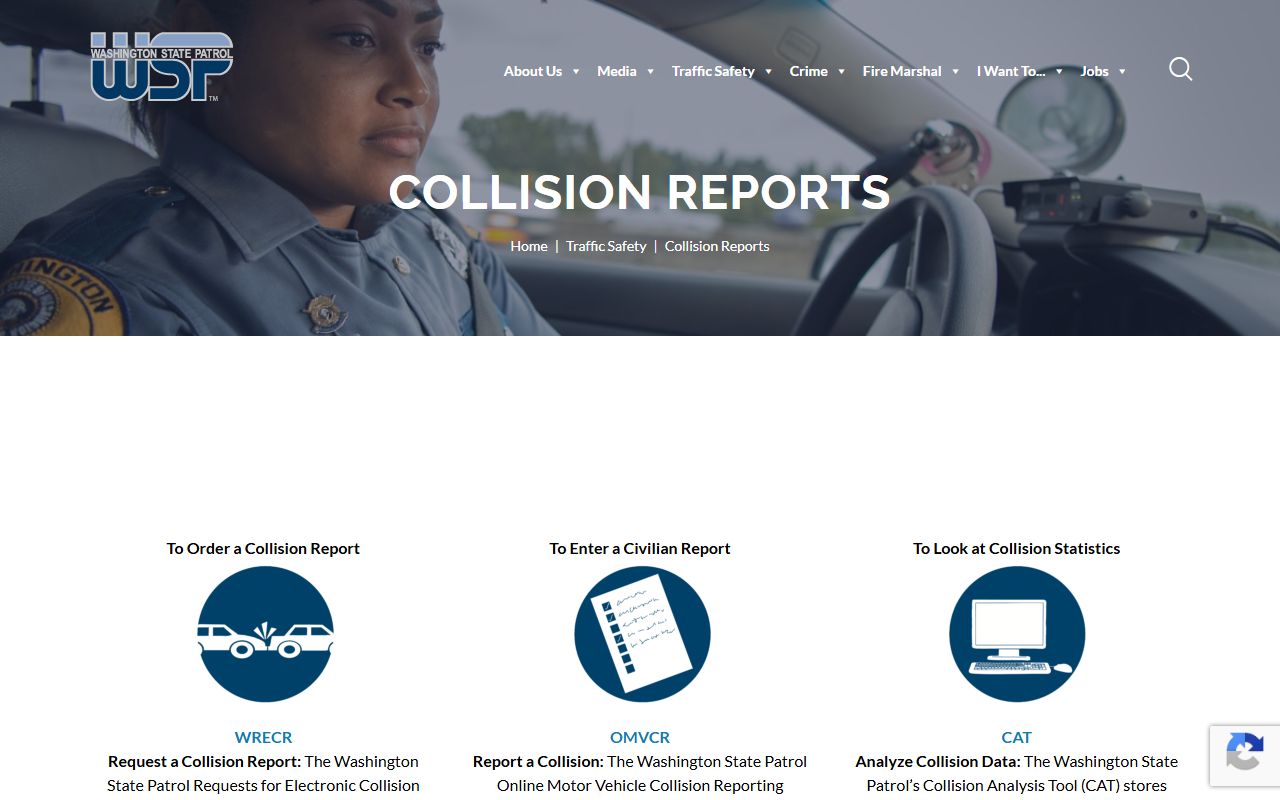
That image is the right home-page complement to the court and DOL tools because collision reports are the third major record path that regularly overlaps with Washington Traffic Ticket Records.
Browse Washington Traffic Ticket Records By County
Use the county hub for county court systems, clerk access, district court paths, and county-level traffic record details across Washington.
Browse Washington Traffic Ticket Records By City
Use the city hub for city-specific and unincorporated-place guides that show where Washington Traffic Ticket Records actually land.