
Lakewood Traffic Ticket Records and Hearing Options
Lakewood Traffic Ticket Records usually start with Lakewood Municipal Court, which serves Lakewood and also handles cases for Steilacoom, University Place, and DuPont by contract. If you received a traffic notice in the city, the court pages explain the basic response choices, how the payment path works, and what happens if you miss the deadline. That makes the municipal court the first place to check for a citation, a hearing request, or a payment question. The city and its contract partners use the same court framework, so the ticket source and the case location both matter when you search for records.
Lakewood Traffic Ticket Records Search
Lakewood Traffic Ticket Records begin with the city municipal court page for traffic violations. Lakewood says a person must respond within 30 days, or within 33 days if the notice was mailed. The response choices include paying the citation, asking for a payment plan, contesting the allegation, or requesting mitigation. That structure is important because the court is not only a place to pay. It is also the office that controls what happens next when a person wants to be heard or needs more time to resolve the matter.
The court page also notes that Lakewood Municipal Court serves Lakewood, Steilacoom, University Place, and DuPont. That is useful when a citation came from one of the contract cities because the hearing and payment path may still run through the same court even if the ticket was written elsewhere. If you are trying to locate a case record, the first question is not just what city appears on the notice. It is which jurisdiction filed the case and which court owns the file.
Lakewood's records and hearing guidance is practical because it gives the public a clear route for moving from citation to court action. The traffic violations page and the payment page work together. One explains the response choices and deadlines. The other explains how payment, billing, and follow-up are handled. For Lakewood Traffic Ticket Records, that combination is often enough to understand the current status before you call or appear.
Lakewood Municipal Court and Traffic Violations
Lakewood Municipal Court is the office that manages Lakewood Traffic Ticket Records, including contested and mitigation hearings. The court says discovery requests are due 14 days before the hearing, and officer subpoena requests are due 7 days before the hearing. Officer hearings are scheduled in person at 10:30 a.m. Those details matter because they show that not every Lakewood ticket follows the same timing. Some hearings rely on written preparation, while others require an officer to appear and the parties to plan ahead.
That schedule is part of the record itself. A hearing date, a subpoena deadline, or a discovery deadline may show up in the case file and shape what evidence can be used. If you are searching Lakewood Traffic Ticket Records because you need to know whether the officer is expected to attend, the court's own instructions are the most useful source. They tell you what happens before the hearing, not just what the final decision will be.
Lakewood also offers a deferred finding option once every 7 years for eligible drivers who do not hold a CDL. That is an important local rule because it can change the long-term result of the case. If the court grants a deferral and the person complies, the final record may look different than a straightforward committed finding. So when you search the file, you need to know whether the person is just paying, asking for mitigation, contesting the infraction, or seeking a deferred outcome.
Lakewood Traffic Ticket Records Response and Payment
Lakewood Traffic Ticket Records can move quickly when the response deadline is missed. The city says failure to respond can lead to a penalty increase, a committed finding reported to the Department of Licensing, suspension, and collections. That means the citation file may grow more serious even without a court appearance. For that reason, the safest response is to act early and keep every confirmation related to the case.
The payment path is handled through the official court system, and the city tells users to choose the correct jurisdiction when they pay. Phone payments are available at 253-344-4580. Lakewood also says 90-day plans are arranged through the court, while longer term plans go through CPMS at 360-748-4784. Those numbers are not just payment details. They show which office controls the current balance and which office can change the way the record is paid over time.
Because Lakewood serves contract cities too, the payment workflow matters for the record search. A person can have a traffic matter that was issued in Steilacoom or University Place but still processed through Lakewood Municipal Court. That is why Lakewood Traffic Ticket Records often require both the citation source and the court location. Without both pieces, it is easy to call the wrong office or look for the wrong case.
Lakewood Traffic Ticket Records and Contract Cities
Lakewood's court role is broader than its own city limits because it serves Steilacoom, University Place, and DuPont under contract. That makes Lakewood Traffic Ticket Records especially useful when the citation came from a nearby city but was filed in Lakewood Municipal Court. The official Steilacoom municipal court page also reflects that relationship, which confirms that the record trail can start in one city and land in another court system.
This setup changes how a search should be done. If the notice shows Lakewood, start with Lakewood Municipal Court. If it shows one of the contract cities, do not assume the city hall is the final record holder. The court may still be Lakewood, and the hearing or payment instructions may come from the Lakewood court page rather than the issuing city. That is especially important when a person is trying to answer a ticket without missing a response window.
Lakewood also makes clear that a deferred finding is not an open-ended option. The 7-year limit and the eligibility rules mean that the court record can reflect a very specific outcome, not a generic resolution. For anyone reviewing Lakewood Traffic Ticket Records later, those details help explain why one file shows a simple payment while another shows a hearing, a plan, or a deferral.
Lakewood Traffic Ticket Records Images
The official Lakewood traffic violations page explains the response window, hearing choices, discovery timing, and officer subpoena steps.
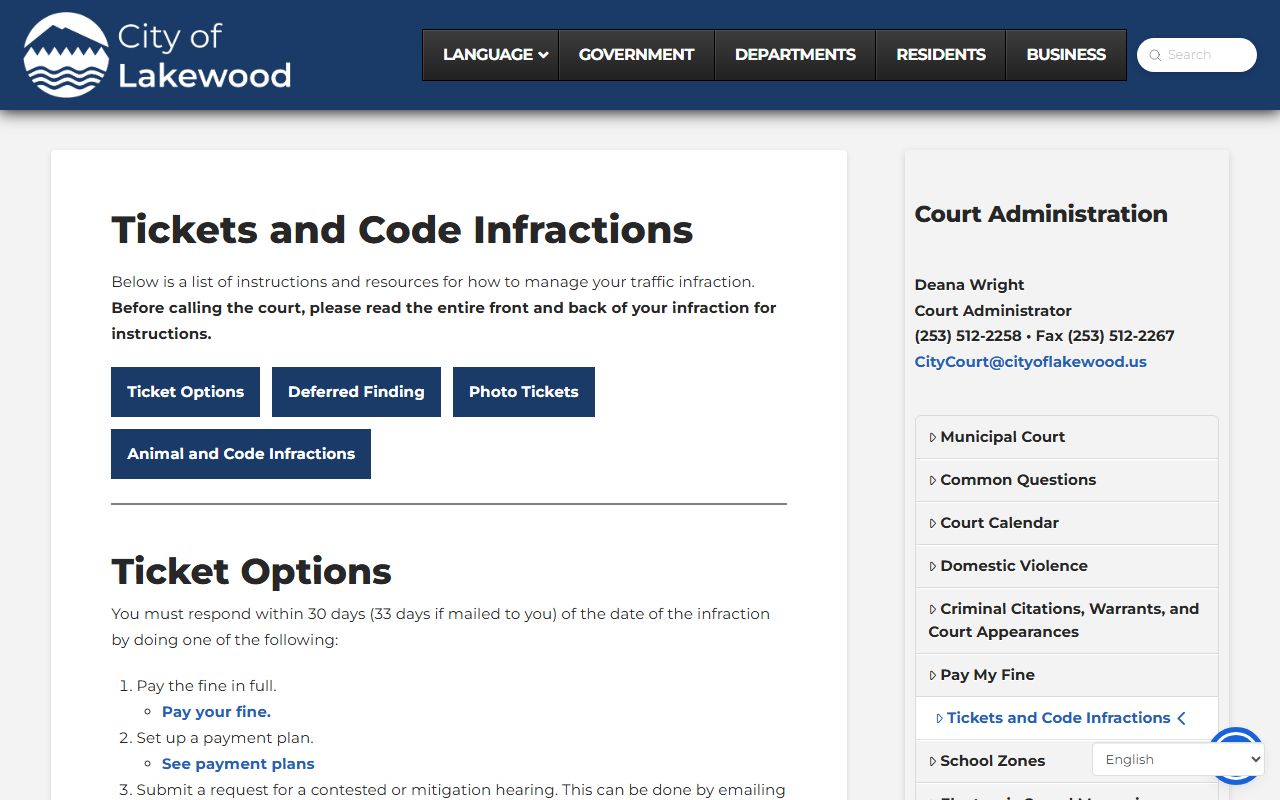
That page is the best starting point when you need to match a Lakewood citation with the right court action.
The official Lakewood pay my fine page shows how the court handles payment questions, plan options, and contact details.
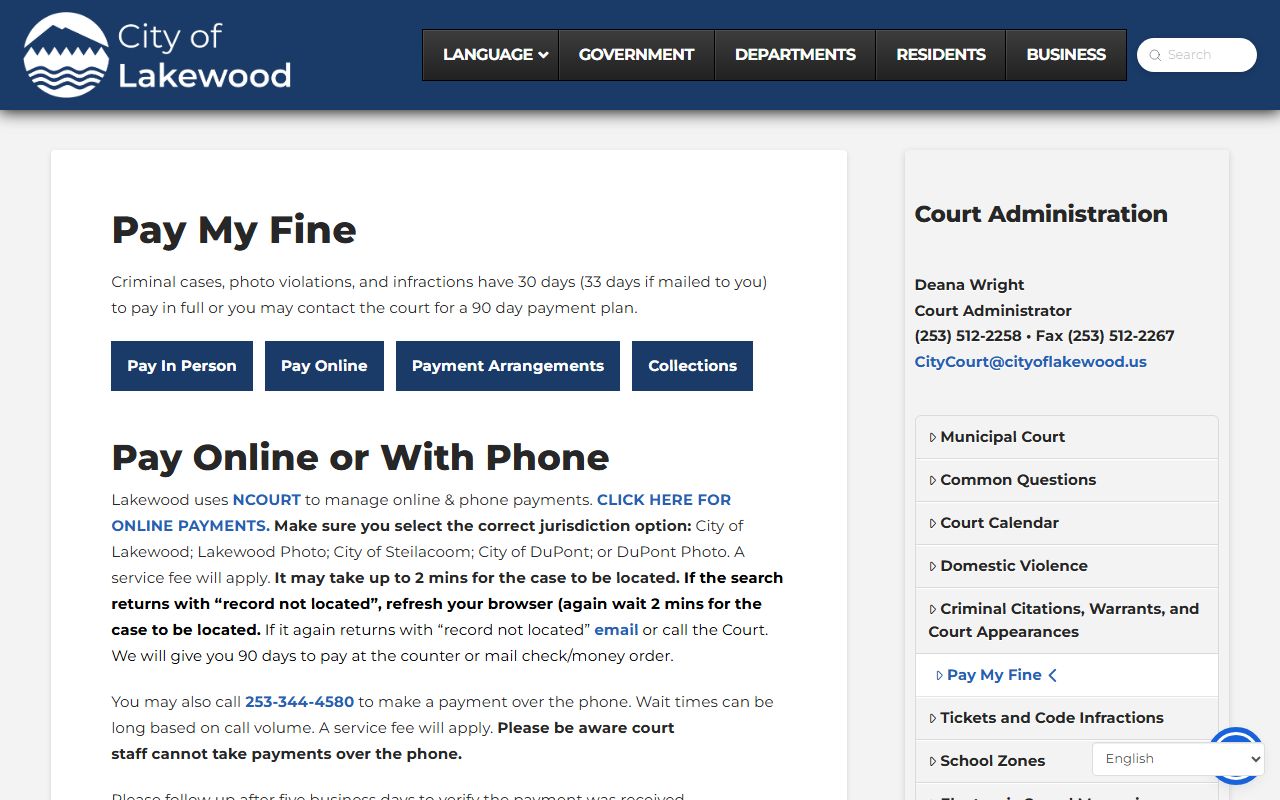
That payment page is useful when you need to confirm how a balance is handled after a citation or hearing.
The official Steilacoom Municipal Court page shows the contract-court relationship that connects some nearby traffic matters to Lakewood Municipal Court.
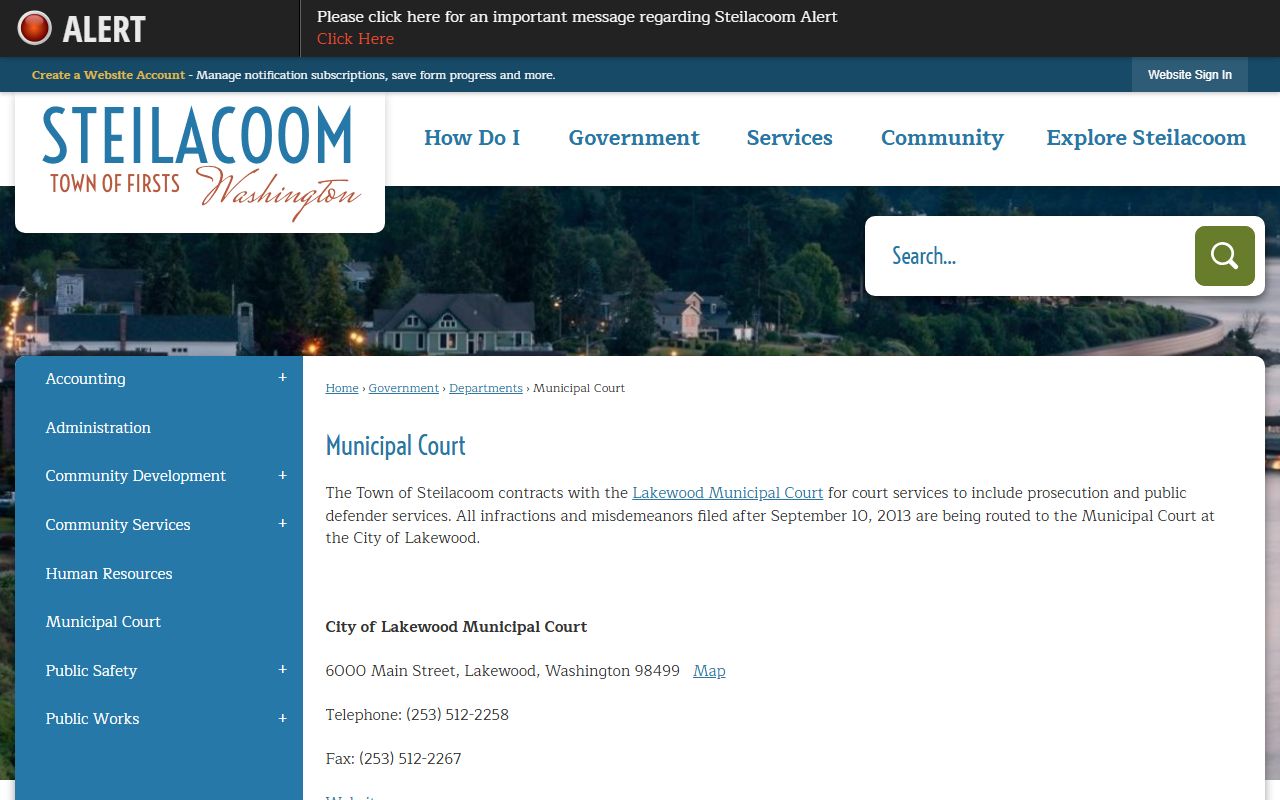
That connection helps explain why the record holder may be Lakewood even when the original ticket was written in a different city.
Lakewood Traffic Ticket Records Next Steps
If you are trying to follow Lakewood Traffic Ticket Records from citation to resolution, begin with the ticket itself and then check the court page for the response window. From there, decide whether the case needs payment, a mitigation request, a contested hearing, or a written hearing approach. If the case already moved past the first deadline, the court page is still the best source for what the next remedial step should be. The city lays out those choices clearly, which makes the records trail easier to follow than a generic notice might suggest.
Lakewood is also one of the clearer examples in this project of a city court that handles more than one jurisdiction. That means the file may belong to Lakewood Municipal Court even if the ticket did not start inside the city limits. When you know that, the rest of the search becomes much simpler. You are looking for the court that controls the matter, not just the city named on the citation.