
Des Moines Municipal Traffic Ticket Records
Des Moines Traffic Ticket Records usually start with Des Moines Municipal Court, because the court is the local office that handles the city's traffic infractions and other limited-jurisdiction matters. The municipal court page also gives you the records request form, the public lobby hours, and the direct payment path, which makes it easier to move from a ticket notice to the right office without bouncing around the city website. If the case has already been filed, the court file and the payment history are the records that matter most. The city's pages keep those steps close together, which is helpful when you are trying to sort out a citation quickly.
Des Moines Traffic Ticket Records Search
Des Moines Municipal Court says it is a court of limited jurisdiction and that the judge is authorized to preside over criminal misdemeanors, gross misdemeanors, traffic infractions, and other City of Des Moines code violations. That makes the court the main holder of a Des Moines traffic case once the citation is filed. The court page is also explicit about contact details, records forms, and public lobby hours, so it serves as the city's practical starting point for ticket lookup work. If your goal is to confirm whether a case is open, paid, or ready for a hearing, the municipal court record is the source to check first.
When you need a broader public check, the statewide Washington Courts case search at dw.courts.wa.gov is the best backup. The state search is useful for confirming a name, a case number, or a court location before you move into the municipal court file. In Des Moines, that is especially useful because the city gives you several court contacts at once. A statewide search can point you at the right file, but the local court page tells you where the record request and payment paths actually live.
Des Moines also keeps a separate municipal court payments and collections page, which is important because some ticket searches are really payment searches in disguise. If the question is whether the citation has been paid, whether a collections issue is active, or whether the matter fits the Unified Payment Program, the city has a direct page for that too. For Des Moines Traffic Ticket Records, the record trail is easier to follow when you start with the court, not with a general city search box.
Des Moines Traffic Ticket Records at Municipal Court
The Des Moines Municipal Court page gives you the local contact structure in one place. The court is at 21630 11th Ave. S., Suite C, Des Moines, WA 98198, and the lobby is open Monday through Friday from 8:00 am to 4:00 pm. The page also provides a Request for Court Records Form, a Court Feedback/Request Form, and an electronic filings email. Those links matter because not every ticket question is answered by the court calendar. Sometimes you need the form that asks for the file itself, and sometimes you need the contact route that gets your request to the right clerk.
The municipal court page is also helpful because it shows what the court itself does. Des Moines says the court provides a safe and accessible environment and handles the limited-jurisdiction cases that usually include traffic matters. That is a useful local detail because it confirms that Des Moines Traffic Ticket Records are not handled by a separate county office when the citation belongs to the city. If a citation was written by city enforcement and filed with the municipal court, the court page is the place to confirm the status and the next step.
For people who prefer a paper trail, the court records form is the cleanest entry point. It is better than a general email because it frames the request around a specific file. That matters when you are looking for the history of a citation, a docket copy, or another court document tied to a traffic matter. Des Moines keeps the request process close to the court itself, which is exactly what you want when the search is about one case rather than a broad public information request.
Des Moines Traffic Ticket Records Payments and Collections
Des Moines gives a detailed payment path on its payments and collections page. If you want to pay in full, the city accepts cash, check, money order, or debit or credit card at the front counter during normal business hours. The city also accepts mailed check or money order payments, and it says online payments can be made through the NCourt link. The page is clear that the citation number should be included on checks and money orders, and it warns people not to send cash. Those are the practical details that matter when the payment receipt is part of the record search.
The official online payment path is useful because it gives you a way to check or resolve the citation without waiting for a call back. If a record is in collections or a balance is still open, the payments page points you back to the court's own process rather than a third-party summary. That is important for Des Moines Traffic Ticket Records because the outcome is not just whether the ticket exists. It is also whether the court has the payment, the collections status, and the case number connected to the same file.
The Unified Payment Program is another local feature worth knowing about. Des Moines says the UP Program is for people whose license is suspended because they have multiple traffic tickets in multiple King County courts. The page explains that a court customer gets the documentation needed to complete the online application, submits the application, and then has the first installment routed through the payment agency so participating courts can notify the Department of Licensing to remove the hold. That makes the UP Program a real record tool, not just a payment convenience. It is one of the ways a Des Moines citation can interact with other local records.
The city also notes that people with fines in only one jurisdiction should contact that court for its relicensing program. That matters because the UP Program is built for multi-court problems. If your Des Moines case is tied to another King County municipal or district court, the program can help bring the records into one payment plan. If it is a single citation, the regular court contact is still the better fit. The city is very direct about that split.
Des Moines Traffic Ticket Records Images
The Des Moines Municipal Court page shows the local court contact path, the records form, and the court's limited-jurisdiction role in traffic cases.
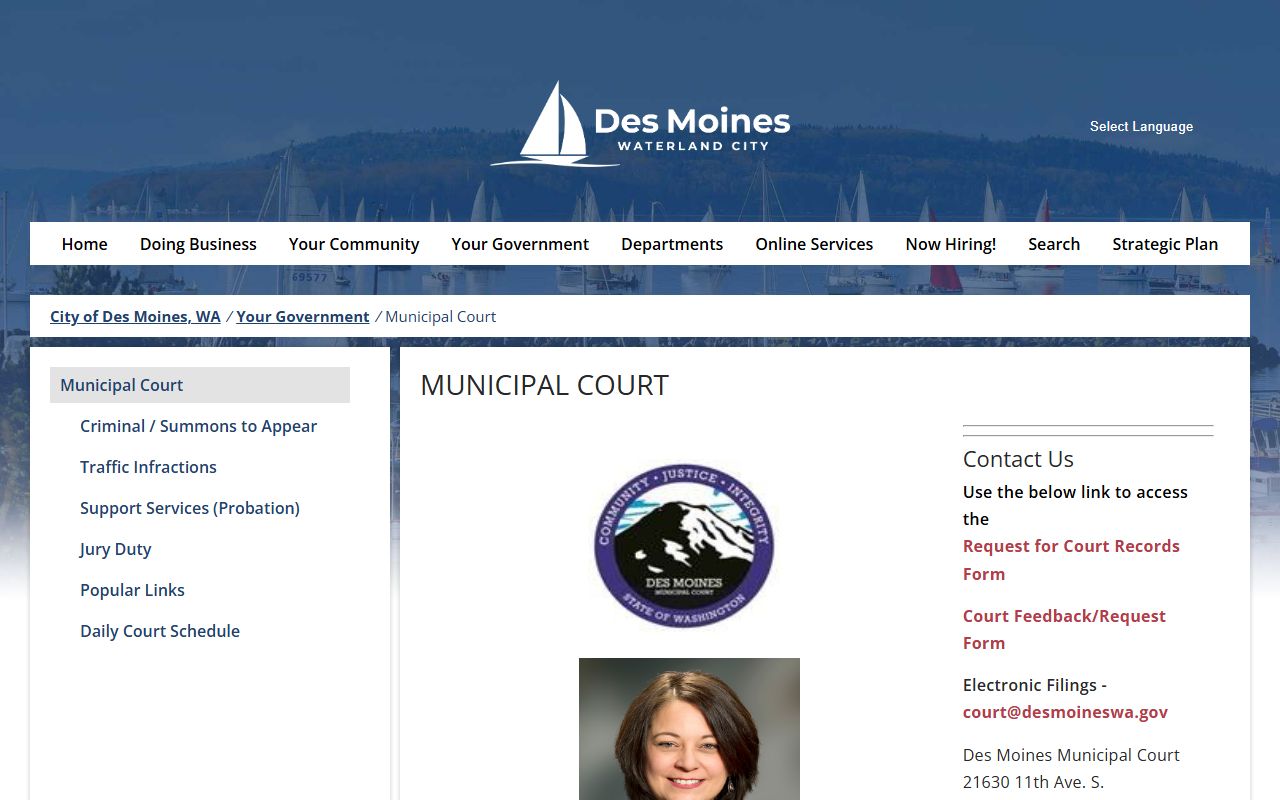
That page is the right starting point when you need the court office, not just a citation summary.
The official Des Moines payment portal shows the online payment path used for municipal court fines and fees.
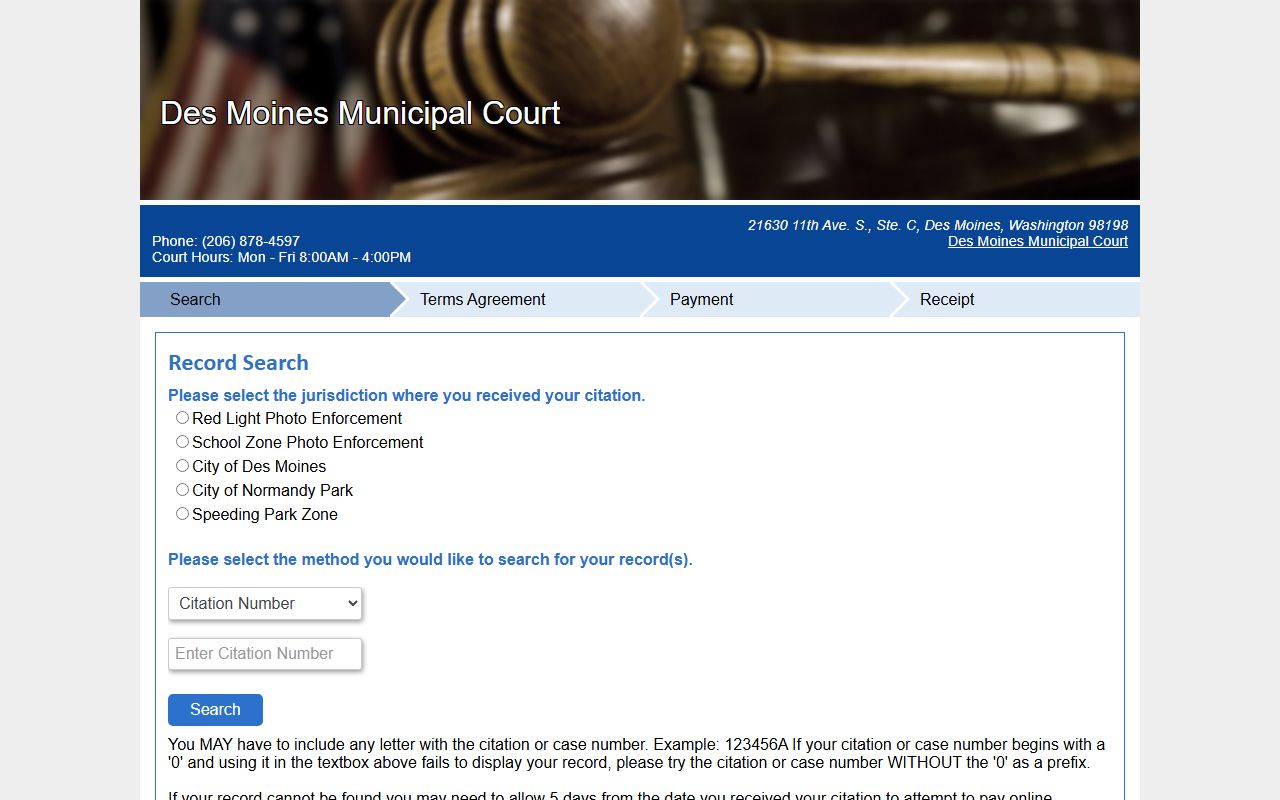
Use that portal when you need the payment side of the record trail, especially if the citation is already open in court.
The payments and collections page explains mailed payments, front-counter payments, collections, and the Unified Payment Program.
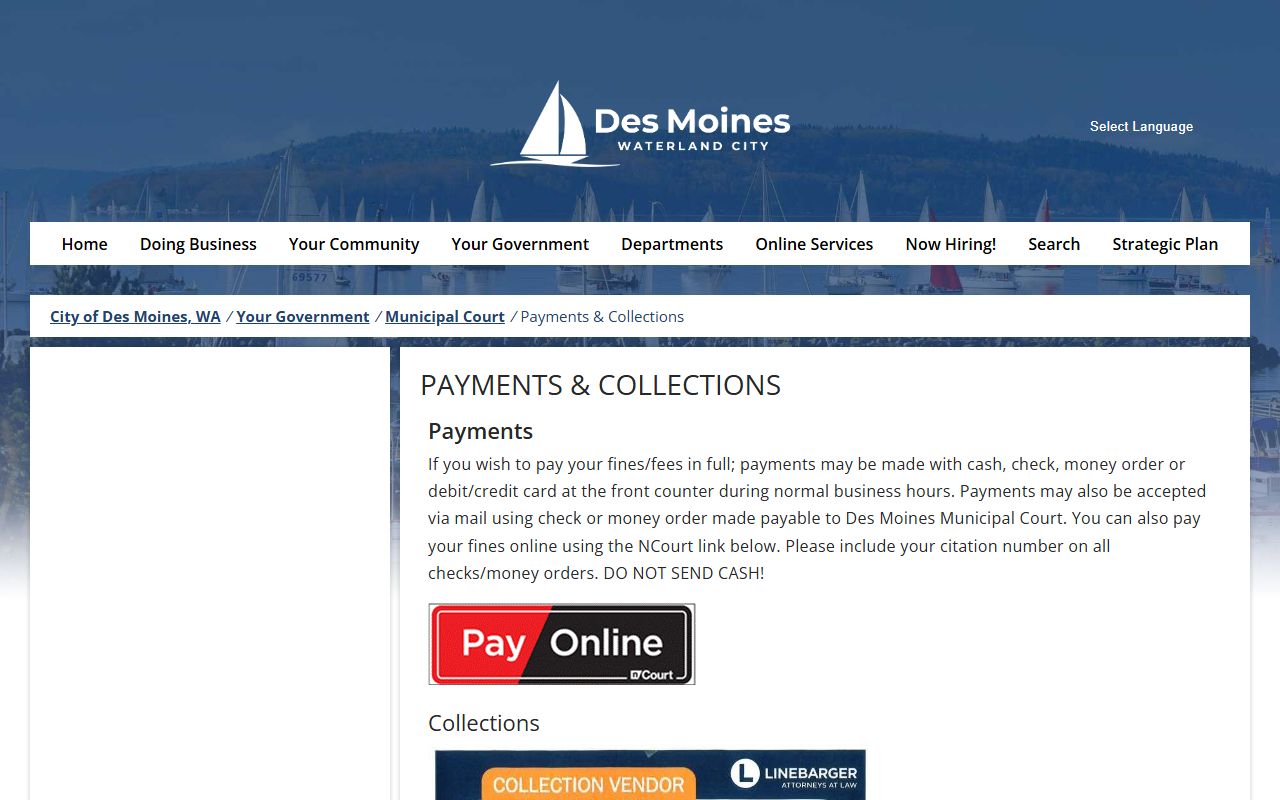
That page is valuable because it shows how payment status and court collections fit into the same local record system.
Des Moines Traffic Ticket Records Next Steps
If you are moving through Des Moines Traffic Ticket Records, start by confirming whether the citation belongs to the municipal court, then match the file to the court records form or the payment portal. Des Moines is a city where the court page and the payments page work together, so the next step is usually obvious once the ticket number is in hand. A request for the file, a payment, or a collections question all point back to the same municipal court record.
If you are still unsure where the case is sitting, use the statewide court search as the public check and then return to the city page that matches the result. That workflow is usually faster than trying to infer the status from a mailed notice or a collection letter. For Des Moines, the most reliable path is simple: court first, records form second, payment or UP Program if needed, and then one final check that the case status matches the action you took.